
What happened
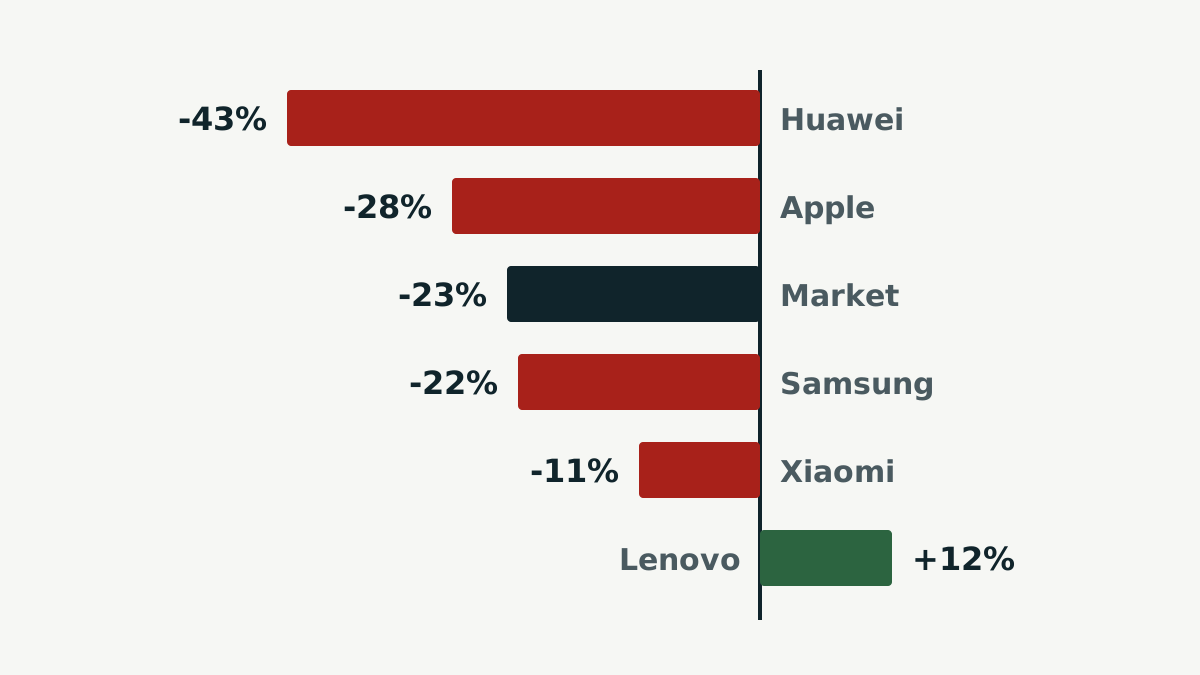
Omdia, a market research firm, published its third-quarter figures on November 5. Tablet shipmentsunits that manufacturers send to stores and distributors in a period; they track supply, not how many people bought a tablet fell 23% year on year to 32 million. It is the second double-digit drop in a row, after a 10% decline in the second quarter. The Middle East, China and Western Europe fell harder than the rest of the market.
"As supply constraints intensify, tablets are increasingly taking a backseat in vendors' strategic priorities for 2026 and 2027," said Himani Mukka, research manager at Omdia.
How the big brands did
- Apple kept the lead, but its shipments fell 28%, more than the market. Its share slipped to 36% from 38.2% a year earlier.
- Samsung stayed second with 5.4 million tablets, down 22%, for a 16.9% share. Omdia says component shortages held back its volumes despite new launches.
- Lenovo was the only top-five brand to grow: up 12% to 4.1 million units, raising its share to 12.7% from 8.7%. Basic slate tablets drove the growth, while its detachable models fell sharply.
- Xiaomi came fourth with 2.3 million, down 11%, helped by a strong quarter in Latin America.
- Huawei closed the top five with 1.8 million, the steepest fall among the leaders at 43%, although it still grew in Central and Eastern Europe and in Asia-Pacific.
Why new models did not help
The second half of the year brought several big launches, Omdia notes, including Samsung's Galaxy Tab S12 series, Apple's iPad mini with an OLED screen and Xiaomi's Pad 9 series. They did little to lift demand. According to Mukka, the same supply problems limit how much makers can upgrade their specifications, so new tablets differ less from the old ones and buyers wait for bigger improvements.
Omdia expects supply to tighten further in 2027 and says a meaningful recovery "is unlikely before 2028". The firm does not say in its release which components are in short supply.
Apple's touch screens are also spreading in another direction: its first touchscreen Mac, the MacBook Pro with a PROLED XDR display, went on sale on November 6.
Sources
Primary sources we checked for this article: